The threat of the internet has forced magazines to get smarter
"PRINT is dead" was a common refrain a couple of years ago. The costly print advertisements that kept magazines and newspapers alive were migrating to the web, where they earned only pennies on the dollar. To publishers, it felt as if a hurricane was flattening their business.
But as the storm has cleared, a new publishing landscape has emerged. What was once a fairly uniform business--identify a group of people united by some shared identity or passion, write stories for them to read and sell advertising next to the stories--has split into several different kinds.
Hard news is perhaps the hardest to make profitable. It is increasingly instant, constant and commoditised (as with oil or rice, consumers do not care where it came from). With rare exceptions, making money in news means publishing either the cheap kind that attracts a very large audience, and making money from ads, or the expensive kind that is critical to a small audience, and making money from subscriptions. Both are cut-throat businesses; in rich countries, many papers are closing.
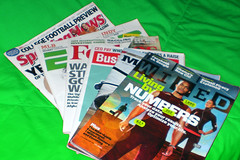
But among magazines there is a new sense of optimism. In North America, where the recession bit deepest (see chart), more new magazines were launched than closed in 2011 for the second year in a row. The Association of Magazine Media (MPA) reports that magazine audiences are growing faster than those for TV or newspapers, especially among the young.
Unlike newspapers, most magazines didn't have large classified-ad sections to lose to the internet, and their material has a longer shelf-life. Above all, says David Carey, the boss of Hearst Magazines, a big American publisher, they represent aspirations: "they do a very good job of inspiring your dreams." People identify closely with the magazines they read, and advertisers therefore love them: magazines, says Paul-Bernhard Kallen, the chairman of Hubert Burda Media, a large German publisher, remain essential for brand-building.
Which is why luxury magazines are doing particularly well, as are those in emerging markets, where a fast-growing middle class is coming into those advertisers' sights. In Brazil, for example, the Abril Group has made Minha Casa, a home-improvement magazine, the leader of its kind in two years thanks to a careful focus on new homeowners.
Back in the United States, the number of ad pages in magazines has dropped for three quarters in a row, according to the Publishers' Information Bureau. But that is partly cyclical, says Nina Link, the MPA's head, and it doesn't account for the growing number of ads in digital form.
Once, digital ads would have been scant comfort. On the web they are typically worth a small fraction of what they were in print. But tablets, such as Apple's iPad, could change this.
They have been around for only two years and most magazine subscriptions on them for less than a year; the MPA suggested measurement standards for advertising on tablets only in April. Yet already there are signs that advertisers are accepting higher rates on tablets than on the web, because magazines on tablets are more like magazines in print: engrossing, well-designed experiences instead of forests of text and links.
Publishers are still experimenting with formats: some are little different from their print versions, while others are more interactive, perhaps too much so. Hearst's Cosmopolitan launched the digital-only Cosmo for Guys, which purports to shed light on feminine psychology for baffled males; an early issue included 3-D models of sexual positions that you could rotate to view from every possible angle. Who says glossy mags aren't educational?
But the wiser publishers are finding ways to rely less on advertising. They are looking to make more not only from subscriptions but also from other sources. Today, "you need five or six revenue streams to make the business really successful," says Mr Carey. Spurred by necessity and enabled by technology, magazines "innovate in ways they never dreamed of a few years ago," says Ms Link.
What else a magazine can do besides sell copies depends on its audience and subject matter. Many are turning themselves from mere carriers of ads into marketing-services companies, giving their advertisers a range of new ways to reach readers. Travel magazines' websites can track if their readers end up buying the holiday packages they write about, and take a cut. "I count that as advertising," says Mr Kallen. "What many people call advertising…is definitely declining, but advertising in the broader sense isn't."
Other commercial branchings-out include a growing range of conferences or celebrity events, the licensing of magazines' names to products such as cosmetics, and tie-ups with deal and coupon websites such as Groupon. Successful new magazines have been launched on the back of TV programmes, such as Hearst's "Food Network" and "HGTV" (a home-improvement show) and the BBC's "Top Gear" (a show about macho cars). With so many countries now boasting a big middle class, international franchises often work well; Hearst's Cosmopolitan now has 66 different country editions.
There are also more esoteric business models. Monocle, a global magazine for the insufferably stylish, claims that the online radio channel it launched last autumn has been profitable from the start, since normal commercial radio stations never deliver the kinds of listeners its high-end advertisers want. The Atavist, an American iPad magazine that publishes one long piece of narrative journalism each month, says it makes money largely because it licenses its iPad publishing software to other people.
Loyalty is lucrative
The ability of magazines to inspire fierce loyalty among readers means there are also lots of small-time, quirky successes. XXI, a French quarterly of long-form reportage, is profitable despite carrying no ads, not putting its text online and being sold only in bookshops; it seems to capitalise on French intellectual traditions and the concentration in Paris of voracious readers. Germany's Landlust, which extols the virtues of living at a relaxed pace and in close contact with nature, is another print-only holdout, with a circulation of 1m after seven years. As long as there are coffee tables, people will want things to put on them.
Source Citation
"Non-news is good news; The magazine industry." The Economist [US] 9 June 2012: 74(US). Educators Reference Complete. Web. 11 June 2012.
Document URL
http://go.galegroup.com/ps/i.do?id=GALE%7CA292200768&v=2.1&u=22054_acld&it=r&p=PROF&sw=w
Gale Document Number: GALE|A292200768

Showing posts with label business writing. Show all posts
Showing posts with label business writing. Show all posts
Monday, June 11, 2012


Tuesday, May 1, 2012
'A' Ok: British singer/songwriter Ed Sheeran's global hit 'The A Team'charts in the U.S. at last
"'The A Team' came from an experience I had when I did a gig at a homeless shelter," 21-year-old British singer/songwriter Ed Sheeran says of his breakout single, released by Elektra/Atlantic in the United States (and by Asylum in the United Kingdom). "I was 18 at the time and kind of quite naive. So, I was a bit taken aback by some of the stories that I heard.
"I got home that night and wrote a lot of the lyrics," he continues. "I wanted to write it so it sounded kind of upbeat, so you wouldn't really know what it's about, because it's quite a dark subject."
More specifically, Sheeran says the subject is hard drug use (and not a reference to the '80s TV show of the same name). "A drug like crack cocaine is called a 'class A' drug. That's in the same category as heroin. Instead of making it clear and just saying what [a person's] problem [with addiction] was, I'd say, 'She's in the 'class A' team.' It was kind of my way of covering it up, making it a bit more subtle."
In the tradition of folk/rock hits like Suzanne Vega's "Luka" (about child abuse) or Tracy Chapman's "Fast Car" (alcoholism) that shade heavy topics under a melodic canopy, "The A Team" has gotten fans singing along to its sunny sound. Last summer, the track soared to No. 3 on the Official Charts Co.'s U.K. singles chart, It has since reached the top 10 in Australia, Germany, Ireland, Japan, Luxembourg, New Zealand and Norway.
This week, Sheeran's worldwide hit makes its first appearance on a U.S. Billboard chart, debuting at No. 30 on the Triple A radio airplay tally. Chart reporter KTCZ (Cities 97) Minneapolis leads all panelists with 143 plays through April 18, according to Nielsen BDS. Among all monitored stations, adult top 40 KLLC (Alice @97.3) San Francisco leads with 345 plays, having been the first to spin it stateside on Jan. 27.
Honored at this year's BRIT Awards as British breakthrough act and British solo male artist, Sheeran returns to his No. 17 peak on the Folk Albums chart with EP The A-Team. As he continues his first North American tour with Snow Patrol, the five-song collection sets up the June 12 U.S. arrival of his debut full-length, +. The Asylum/Warner set was No. 1 on the U.K. chart for three weeks last year,
Before then, Sheeran will throw fans a curve: the Slumdon Bridge EP (due April 24 on Elektra) with Shady/Interscope tapper Yelawolf, whom he's long admired. "I reached out, he said yes," Sheeran says. "We had 10 hours in a studio together and made four songs, which I love. The EP is a good fusion of both worlds."
For exclusive video content with Ed Sheeran, go to Billboard.com//chartbeat.
Trust, Gary
Source Citation
Trust, Gary. "'A' Ok: British singer/songwriter Ed Sheeran's global hit 'The A Team' charts in the U.S. at last." Billboard 28 Apr. 2012: 35. Fine Arts and Music Collection. Web. 1 May 2012.
Document URL
http://go.galegroup.com/ps/i.do?id=GALE%7CA287867528&v=2.1&u=22054_acld&it=r&p=PPFA&sw=w
Gale Document Number: GALE|A287867528
"I got home that night and wrote a lot of the lyrics," he continues. "I wanted to write it so it sounded kind of upbeat, so you wouldn't really know what it's about, because it's quite a dark subject."
More specifically, Sheeran says the subject is hard drug use (and not a reference to the '80s TV show of the same name). "A drug like crack cocaine is called a 'class A' drug. That's in the same category as heroin. Instead of making it clear and just saying what [a person's] problem [with addiction] was, I'd say, 'She's in the 'class A' team.' It was kind of my way of covering it up, making it a bit more subtle."
In the tradition of folk/rock hits like Suzanne Vega's "Luka" (about child abuse) or Tracy Chapman's "Fast Car" (alcoholism) that shade heavy topics under a melodic canopy, "The A Team" has gotten fans singing along to its sunny sound. Last summer, the track soared to No. 3 on the Official Charts Co.'s U.K. singles chart, It has since reached the top 10 in Australia, Germany, Ireland, Japan, Luxembourg, New Zealand and Norway.
This week, Sheeran's worldwide hit makes its first appearance on a U.S. Billboard chart, debuting at No. 30 on the Triple A radio airplay tally. Chart reporter KTCZ (Cities 97) Minneapolis leads all panelists with 143 plays through April 18, according to Nielsen BDS. Among all monitored stations, adult top 40 KLLC (Alice @97.3) San Francisco leads with 345 plays, having been the first to spin it stateside on Jan. 27.
Honored at this year's BRIT Awards as British breakthrough act and British solo male artist, Sheeran returns to his No. 17 peak on the Folk Albums chart with EP The A-Team. As he continues his first North American tour with Snow Patrol, the five-song collection sets up the June 12 U.S. arrival of his debut full-length, +. The Asylum/Warner set was No. 1 on the U.K. chart for three weeks last year,
Before then, Sheeran will throw fans a curve: the Slumdon Bridge EP (due April 24 on Elektra) with Shady/Interscope tapper Yelawolf, whom he's long admired. "I reached out, he said yes," Sheeran says. "We had 10 hours in a studio together and made four songs, which I love. The EP is a good fusion of both worlds."
For exclusive video content with Ed Sheeran, go to Billboard.com//chartbeat.
Trust, Gary
Source Citation
Trust, Gary. "'A' Ok: British singer/songwriter Ed Sheeran's global hit 'The A Team' charts in the U.S. at last." Billboard 28 Apr. 2012: 35. Fine Arts and Music Collection. Web. 1 May 2012.
Document URL
http://go.galegroup.com/ps/i.do?id=GALE%7CA287867528&v=2.1&u=22054_acld&it=r&p=PPFA&sw=w
Gale Document Number: GALE|A287867528
Friday, March 30, 2012
Small Town Peep Show
This is the earthy novel of small-town life in New Hampshire which sprang into the news some weeks ago when the Gilmanton School Board dismissed young George Metalious from his position as principal of the local grammar school. “They told me it was because of my wife.” said Mr. Metalious. “They don't like her book.” Later, the school board said they had dismissed the young teacher for reasons of their own, which had no bearing on the novel. The author herself still insisted that word had got around Gilmanton that Peyton Place, was a real shocker: “People suddenly decided that George is not the type to teach their sweet innocent children.”
Whatever the merits of the Metalious case, the novel lives up very fully to its advance billing. It opens on a warm autumn day in the Thirties with a comparison between Indian summer and a woman (“Ripe, hotly passionate, but fickle, she comes and goes as she pleases”). What follows is a carefully calculated expose of the comings and goings of a large cast of typical characters in a small New England town until another Indian summer some ten years later.
We learn that life behind the scenes in New Hampshire is not widely different, fictionally speaking, from life in Winesburg, Ohio, Hecate County, Conn. or Gibbsville, Pa. It is only (if that is possible) a little “riper,” a little more “hotly passionate.” a little more frankly detailed—and, perhaps a little more widely inclusive than the small-town chronicles of Messrs. Sherwood Anderson, Edmund Wilson and John O'Hara. The late Sinclair Lewis would no doubt have hailed Grace Metalious as a sister-in-arms against the false fronts and bourgeois pretensions of allegedly respectable communities, and certified her as a public accountant of what goes on in the basements, bedrooms and back porches of a “typical American town.”
Mrs. Metalious, who is a pretty fair writer for a first novelist, comes and goes with the Indian Summer air of an emancipated modern authoress who knows the earthy words and rarely stints to use them. Samples of the adventures in store for readers of Peyton Place would include the following: Successive violations of a 14-year-old girl by her stepfather, leading to an abortion sadly performed by the town's admirable doctor. A murder in a “shacker's” hut with secret burial of the remains in a sheep pen. A suicide in a bedroom closet: A carnival accident which amputates a young girl's arm. A high-school seduction in which the girl is bought-off by the boy's rich and corrupt-father. The seduction of the local dress-shop proprietress by the village schoolmaster. The deflowering of her nubile novelist-daughter by an erotically expert New York literary agent. A lengthy hard-cider binge in a locked cellar involving among others the town handyman who imbibes as a protest against his wife's multiple adulteries. The strangling of a pet tomcat at the feet of a dead spinster by a neurotic boy who has retchingly peered through a backyard hedge at the amorous activities of a neighbor couple.
If Mrs. Metalious can turn her emancipated talents to less lurid purposes, her future as novelist is a good bet. Another good bet is that the citizens of Gilmanton, N.H., can look forward to a busy Indian summer of open or surreptitious reading.
Source Citation Baker, Carlos. "Small Town Peep Show." New York Times Book Review (23 Sept. 1956): 4. Rpt. in Literature Resource Center. Detroit: Gale, 2012. Literature Resource Center. Web. 30 Mar. 2012.
Document URL
http://go.galegroup.com/ps/i.do?id=GALE%7CH1420009812&v=2.1&u=22054_acld&it=r&p=LitRG&sw=w
..
Gale Document Number: GALE|H1420009812
Whatever the merits of the Metalious case, the novel lives up very fully to its advance billing. It opens on a warm autumn day in the Thirties with a comparison between Indian summer and a woman (“Ripe, hotly passionate, but fickle, she comes and goes as she pleases”). What follows is a carefully calculated expose of the comings and goings of a large cast of typical characters in a small New England town until another Indian summer some ten years later.
We learn that life behind the scenes in New Hampshire is not widely different, fictionally speaking, from life in Winesburg, Ohio, Hecate County, Conn. or Gibbsville, Pa. It is only (if that is possible) a little “riper,” a little more “hotly passionate.” a little more frankly detailed—and, perhaps a little more widely inclusive than the small-town chronicles of Messrs. Sherwood Anderson, Edmund Wilson and John O'Hara. The late Sinclair Lewis would no doubt have hailed Grace Metalious as a sister-in-arms against the false fronts and bourgeois pretensions of allegedly respectable communities, and certified her as a public accountant of what goes on in the basements, bedrooms and back porches of a “typical American town.”
Mrs. Metalious, who is a pretty fair writer for a first novelist, comes and goes with the Indian Summer air of an emancipated modern authoress who knows the earthy words and rarely stints to use them. Samples of the adventures in store for readers of Peyton Place would include the following: Successive violations of a 14-year-old girl by her stepfather, leading to an abortion sadly performed by the town's admirable doctor. A murder in a “shacker's” hut with secret burial of the remains in a sheep pen. A suicide in a bedroom closet: A carnival accident which amputates a young girl's arm. A high-school seduction in which the girl is bought-off by the boy's rich and corrupt-father. The seduction of the local dress-shop proprietress by the village schoolmaster. The deflowering of her nubile novelist-daughter by an erotically expert New York literary agent. A lengthy hard-cider binge in a locked cellar involving among others the town handyman who imbibes as a protest against his wife's multiple adulteries. The strangling of a pet tomcat at the feet of a dead spinster by a neurotic boy who has retchingly peered through a backyard hedge at the amorous activities of a neighbor couple.
If Mrs. Metalious can turn her emancipated talents to less lurid purposes, her future as novelist is a good bet. Another good bet is that the citizens of Gilmanton, N.H., can look forward to a busy Indian summer of open or surreptitious reading.
Source Citation Baker, Carlos. "Small Town Peep Show." New York Times Book Review (23 Sept. 1956): 4. Rpt. in Literature Resource Center. Detroit: Gale, 2012. Literature Resource Center. Web. 30 Mar. 2012.
Document URL
http://go.galegroup.com/ps/i.do?id=GALE%7CH1420009812&v=2.1&u=22054_acld&it=r&p=LitRG&sw=w
..
Gale Document Number: GALE|H1420009812
Thursday, March 22, 2012
PEN American Center: PEN/Robert Bingham Prize
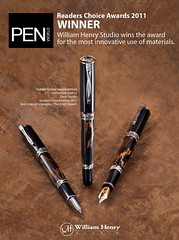
Susanna Daniel of Madison, Wisconsin, and Danielle Evans of Washington, D.C., won the 2011 PEN/Robert Bingham Prize. Daniel won for her novel, Stiltsville (Harper Perennial), and Evans won for her short story collection, Before You Suffocate Your Own Fool Self (Riverhead Books). Each received $12,500. The judges were Susan Cheever, Paul Harding, and Yiyun Li. The prize, typically given to one writer, is awarded annually for a first novel or story collection published during the previous year. The next deadline is February 1, 2012.
PEN/W. G. SEBALD AWARD
Aleksandar Hemon of Chicago won the 2011 PEN/W. G. Sebald Award for a Fiction Writer in Midcareer. Hemon, whose most recent book is the story collection Love and Other Obstacles (Riverhead Books, 2009), received $10,000. The judg es were Jill Ciment, Salvatore Scibona, and Gary Shteyngart. The annual award is given to an author who has published at least three books of fiction. There is no application process.
PEN/E. O. WILSON LITERARY SCIENCE WRITING AWARD
Siddhartha Mukherjee of New York City won the 2011 PEN/E. O. Wilson Literary Science Writing Award for The Emperor of All Maladies (Scribner). He received $10,000. The judges were Rita Charon, Bill McKibben, and Richard Panek. The annual award is given for a book of nonfiction (including creative nonfiction) incorporating the physical and biological sciences. The next deadline is February 1, 2012.
PEN/JOYCE OSTERWEIL AWARD FOR POETRY
Ishion Hutchinson of Baltimore won the 2011 PEN/Joyce Osterweil Award for Poetry for his collection, Far District (Peepal Tree Press). He received $5,000. The judges were Carolyn Forche, Kimiko Hahn, and Terrance Hayes. The biennial award is given to an emerging poet of any age. As of this writing, the next deadline has not been set.
PEN/OPEN BOOK AWARD
Manu Joseph of Delhi, India, won the 2011 PEN/Open Book Award for his novel, Serious Men (Norton). He received $5,000. The annual award is given to an emerging writer of color for a book published in the previous year. The next deadline is February 1, 2012.
PEN/DIAMONDSTEIN-SPIELVOGEL AWARD
Mark Slouka of Chicago won the PEN/ Diamondstein-Spielvogel Award for the Art of the Essay for Essays From the Nick of Time: Reflections and Refutations (Graywolf Press). He received $5,000. The judges were Andre Aciman, Jo Ann Beard, and William H. Gass. The annual award is given for an essay collection published in the previous year. The next deadline is February 1, 2012.
PEN AWARD FOR POETRY IN TRANSLATION
Khaled Mattawa of Ann Arbor, Michigan, won the 2011 PEN Award for Poetry in Translation for his translation from the Arabic of Adonis: Selected Poems (Yale University Press). He received $3,000. Martha Cooley judged. The annual prize honors a book-length translation of poetry from any language into English published in the United States during the previous year. The next deadline is February 1, 2012.
PEN TRANSLATION PRIZE
Ibrahim Muhawi of Eugene, Oregon, won the 2011 PEN Translation Prize for his translation from the Arabic of Mahmoud Darwish's essay collection Journal of an Ordinary Grief (Archipelago Books). He received $3,000. The judges were Jonathan Cohen, Barbara Harshav, and Sara Khalili. The annual prize honors a book-length literary translation from any language into English published in the United States during the previous year. The next deadline is February 1, 2012.
PEN/EMERGING WRITERS AWARDS
Poet Adam Day of Richmond, Indiana, fiction writer Smith Henderson of Lewisburg, Pennsylvania, and creative nonfiction writer David Stuart MacLean of Chicago won 2011 PEN/Emerging Writers Awards. Each received $1,660. The judges were Reif Larsen, David Lehman, and Robin Romm. The annual awards are given to a poet, a fiction writer, and a creative nonfiction writer who have published work in literary journals but have not published a book. There is no application process.
PEN American Center, 588 Broadway, Suite 303, New York, NY 10012. awards@pen.org
www.pen.org
Hartig, Jean
Source Citation Hartig, Jean. "PEN American Center: PEN/Robert Bingham Prize." Poets & Writers Magazine 39.6 (2011): 145+. Literature Resource Center. Web. 22 Mar. 2012.
Document URL
http://go.galegroup.com/ps/i.do?id=GALE%7CA272245731&v=2.1&u=22054_acld&it=r&p=LitRG&sw=w
..
Gale Document Number: GALE|A272245731
PEN/W. G. SEBALD AWARD
Aleksandar Hemon of Chicago won the 2011 PEN/W. G. Sebald Award for a Fiction Writer in Midcareer. Hemon, whose most recent book is the story collection Love and Other Obstacles (Riverhead Books, 2009), received $10,000. The judg es were Jill Ciment, Salvatore Scibona, and Gary Shteyngart. The annual award is given to an author who has published at least three books of fiction. There is no application process.
PEN/E. O. WILSON LITERARY SCIENCE WRITING AWARD
Siddhartha Mukherjee of New York City won the 2011 PEN/E. O. Wilson Literary Science Writing Award for The Emperor of All Maladies (Scribner). He received $10,000. The judges were Rita Charon, Bill McKibben, and Richard Panek. The annual award is given for a book of nonfiction (including creative nonfiction) incorporating the physical and biological sciences. The next deadline is February 1, 2012.
PEN/JOYCE OSTERWEIL AWARD FOR POETRY
Ishion Hutchinson of Baltimore won the 2011 PEN/Joyce Osterweil Award for Poetry for his collection, Far District (Peepal Tree Press). He received $5,000. The judges were Carolyn Forche, Kimiko Hahn, and Terrance Hayes. The biennial award is given to an emerging poet of any age. As of this writing, the next deadline has not been set.
PEN/OPEN BOOK AWARD
Manu Joseph of Delhi, India, won the 2011 PEN/Open Book Award for his novel, Serious Men (Norton). He received $5,000. The annual award is given to an emerging writer of color for a book published in the previous year. The next deadline is February 1, 2012.
PEN/DIAMONDSTEIN-SPIELVOGEL AWARD
Mark Slouka of Chicago won the PEN/ Diamondstein-Spielvogel Award for the Art of the Essay for Essays From the Nick of Time: Reflections and Refutations (Graywolf Press). He received $5,000. The judges were Andre Aciman, Jo Ann Beard, and William H. Gass. The annual award is given for an essay collection published in the previous year. The next deadline is February 1, 2012.
PEN AWARD FOR POETRY IN TRANSLATION
Khaled Mattawa of Ann Arbor, Michigan, won the 2011 PEN Award for Poetry in Translation for his translation from the Arabic of Adonis: Selected Poems (Yale University Press). He received $3,000. Martha Cooley judged. The annual prize honors a book-length translation of poetry from any language into English published in the United States during the previous year. The next deadline is February 1, 2012.
PEN TRANSLATION PRIZE
Ibrahim Muhawi of Eugene, Oregon, won the 2011 PEN Translation Prize for his translation from the Arabic of Mahmoud Darwish's essay collection Journal of an Ordinary Grief (Archipelago Books). He received $3,000. The judges were Jonathan Cohen, Barbara Harshav, and Sara Khalili. The annual prize honors a book-length literary translation from any language into English published in the United States during the previous year. The next deadline is February 1, 2012.
PEN/EMERGING WRITERS AWARDS
Poet Adam Day of Richmond, Indiana, fiction writer Smith Henderson of Lewisburg, Pennsylvania, and creative nonfiction writer David Stuart MacLean of Chicago won 2011 PEN/Emerging Writers Awards. Each received $1,660. The judges were Reif Larsen, David Lehman, and Robin Romm. The annual awards are given to a poet, a fiction writer, and a creative nonfiction writer who have published work in literary journals but have not published a book. There is no application process.
PEN American Center, 588 Broadway, Suite 303, New York, NY 10012. awards@pen.org
www.pen.org
Hartig, Jean
Source Citation Hartig, Jean. "PEN American Center: PEN/Robert Bingham Prize." Poets & Writers Magazine 39.6 (2011): 145+. Literature Resource Center. Web. 22 Mar. 2012.
Document URL
http://go.galegroup.com/ps/i.do?id=GALE%7CA272245731&v=2.1&u=22054_acld&it=r&p=LitRG&sw=w
..
Gale Document Number: GALE|A272245731
Tuesday, March 20, 2012
Larry Wilde." Contemporary Authors

Larry Wilde
Contemporary Authors Online , 2001
Updated: June 28, 2001
Born: 1928
Nationality: American
Occupation: Writer
Larry Wilde
A novel; more humor books.
WRITINGS BY THE AUTHOR:
•The Great Comedians Talk about Comedy (compendium of taped interviews), Citadel (Secaucus, NJ), 1968, revised edition published as The Great Comedians, 1973.
•How the Great Comedy Writers Create Laughter, Nelson- Hall (Chicago), 1976.
•The Complete Book of Ethnic Humor, Corwin (Los Angeles), 1978.
•The Larry Wilde Book of Limericks, Bantam (New York City), 1982.
•The Larry Wilde Library of Laughter, Jester Press, 1988.
•The Larry Wilde Treasury of Laughter, Jester Press, 1992.
•Dimwits, Dweezils and Dumbbells, Pinnacle Books (New York City), 1996.
•When You're Up to Your Eyeballs in Alligators, Jester Press (Carmel, CA), 1998.
"OFFICIAL" JOKE BOOKS
•The Official Polish/Italian Joke Book, Pinnacle Books, 1973.
•The Official Jewish/Irish Joke Book, Pinnacle Books, 1974.
•The Official Virgins/Sex Maniacs Joke Book, Pinnacle Books, 1975.
•The Official Black Folks/White Folks Joke Book, Pinnacle Books, 1975.
•More of the Official Polish/Italian Joke Book, Pinnacle Books, 1975.
•The Official Democrat/Republican Joke Book, Pinnacle Books, 1976.
•The Official Religious/Not So Religious Joke Book, Pinnacle Books, 1976.
•The Official Ethnic Calendar for 1977, Pinnacle Books, 1977.
•The Official Smart Kids/Dumb Parents Joke Book, Pinnacle Books, 1977.
•The Official Golfers Joke Book, Pinnacle Books, 1977.
•The Last Official Polish Joke Book, Pinnacle Books, 1977.
•The Official Dirty Joke Book, Pinnacle Books, 1977.
•The Official Cat Lovers/Dog Lovers Joke Book, Pinnacle Books, 1978.
•The Last Official Italian Joke Book, Pinnacle Books, 1978.
•More of the Official Jewish/Irish Joke Book, Pinnacle Books, 1979.
•The Official Book of Sick Jokes, Pinnacle Books, 1979.
•More of the Official Smart Kids/Dumb Parents Joke Book, Pinnacle Books, 1979.
•More of the Official Democratic/Republican Joke Book, Pinnacle Books, 1979.
•The Official Bedroom/Bathroom Joke Book, Pinnacle Books, 1980.
•The Last Official Jewish Joke Book, Bantam, 1980.
•More of the Official Sex Maniacs Joke Book, Bantam, 1981.
•The Official Doctors Joke Book, Bantam, 1981.
•The Official Lawyers Joke Book, Bantam, 1982.
•The Last Official Sex Maniacs Joke Book, Bantam, 1982.
•The Last Official Irish Joke Book, Bantam, 1983.
•The Absolutely Last Official Polish Joke Book, Bantam, 1983.
•The Last Official Smart Kids Joke Book, Bantam, 1983.
•The Official Rednecks Joke Book, Bantam, 1984.
•The Official Politicians Joke Book, Bantam, 1984.
•The Official Book of John Jokes, Bantam, 1985.
•The Official Sports Maniacs Joke Book, Bantam, 1985.
•The Absolutely Last Official Sex Maniacs Joke Book, Bantam, 1985.
•The Official Executives Joke Book, Bantam, 1986.
•More of the Official Doctors Joke Book, Bantam, 1986.
•The Official All-American Joke Book, Bantam, 1988.
•The Official W.A.S.P. Joke Book, Bantam, 1988.
•(With Steve Wozniak) The Official Computer Freaks Joke Book, Bantam, 1989.
•The Official Locker Room Joke Book, Bantam, 1991.
•The Official Merriest Christmas Humor Joke Book, Bantam, 1991.
•The Official Golf Lovers Joke Book, Bantam, 1992.
"ULTIMATE" JOKE BOOKS
•The Ultimate Jewish Joke Book, Bantam, 1986.
•The Ultimate Lawyers Joke Book, Bantam, 1987.
•The Ultimate Sex Maniacs Joke Book, Bantam, 1989.
•The Ultimate Ethnic Humor Joke Book, Bantam, 1989.
•The Ultimate Pet Lovers Joke Book, Bantam, 1990.
OTHER
Has recorded albums, including The Joker Is Wild, Dot Records, and The Official Polish/Italian Comedy Album, Samada Records. Contributor to trade publications, including Professional Speaker and to periodicals, including Coronet, Gallery, Genesis, and Penthouse. The Great Comedians Talk about Comedy has been serialized in TV Guide and in newspapers.
Comedian, performing in night clubs, on stage, and in television. Made professional appearances while attending the University of Miami, has since performed in more than nine hundred cities in forty-nine states, as well as Australia, Canada, the Caribbean, and Europe, sharing the bill with such stars as Vikki Carr, Jack Jones, Diahann Carroll, Ann Margaret, Debbie Reynolds, Pat Boone, and Andy Williams; night club engagements include the Copacabana in New York, Harrah's at Lake Tahoe, Desert Inn in Las Vegas, and Latin Casino in Philadelphia. Has appeared on stage in One Damn Thing after Another (revue), Send Me No Flowers (comedy play), Of Thee I Sing (musical), and Candide (musical drama). Has appeared on television programs, including The Tonight Show, The Today Show, The Merv Griffin Show, and on situation comedies, including The Mary Tyler Moore Show and Sanford and Son. Has appeared in commercials for State Farm Insurance, Exxon, Chevrolet, Wrigley Gum, and others. Lecturer on comedy at universities, including University of Southern California, University of California, University of Miami, and New York University. Conducts humor workshops for corporate executives and public speakers. Founder of National Humor Month.
Family: Surname originally Wildman; born February 6, 1928, in Jersey City, NJ; son of Selig and Gertrude (Schwartzwald) Wildman; married Maryruth Poulos, June 2, 1974. Education: University of Miami, B.A., 1952. Politics: Liberal. Religion: Jewish. Avocational Interests: Golf, skiing, cooking (with salads as the specialty of the house). Military/Wartime Service: U.S. Marine Corps, Special Services, 1946-48; writer, director, and actor in service musicals and variety shows. Memberships: PEN (president, Los Angeles Center, 1981-83), Screen Actors Guild, American Federation of Television and Radio Artists, National Speakers Association. Addresses: Home: 25470 Canada Dr., Carmel, CA 93923. Agent: Jane Jordan Browne, 410 South Michigan Ave., Chicago, IL 60605.
"Sidelights"
"You can hardly walk into a bookstore these days without coming upon a new collection of jokes by Larry Wilde," writes Clarence Peterson in the Chicago Tribune. Wilde's books have sold over eleven million copies and are available in fifty-three countries. In a Publishers Weekly article, Wilde explains his popularity: "Really offensive ethnic jokes may not be exactly tasteful, but from time immemorial this sort of comedy has met a primal need, whether it be for the pure fun of it or because it releases some basic tension and fear in man. The ethnic joke has become America's most popular form of wisecracking." While ethnic humor often comes under attack, Wilde feels it will survive. "Ethnic humor will stay with us in spite of those who think of it as being `sick, mean-spirited and sacreligious,'" he adds. "We are a nation of many peoples from many lands, and if we have learned anything about the human spirit it is that in order to survive we must laugh at ourselves."
Wilde once told CA: "I love humor. Making people laugh has been a significant part of my life for over thirty years. I like hearing that a hospital patient enjoyed one of my joke books or that someone needing a lift got big giggles from some of my gags. When I learn that an aspiring comedian or comedy writer was motivated or influenced by having read one of my serious works on humor it makes me proud. I feel I've made some small contribution to the potential of future professionals."
Wilde's National Humor Month commences each April to "spotlight the importance of laughter in our lives." He lectures to corporations, associations, and healthcare professionals on how humor can overcome stress and tension in the workplace.
Further Readings
PERIODICALS
•Chicago Tribune, July 7, 1987.
•Publishers Weekly, November 25, 1983.
Source Citation:
"Larry Wilde." Contemporary Authors Online. Detroit: Gale, 2001. Gale Biography In Context. Web. 20 Mar. 2012.
Document URL
http://ic.galegroup.com/ic/bic1/ReferenceDetailsPage/ReferenceDetailsWindow?displayGroupName=Reference&disableHighlighting=false&prodId=BIC1&action=e&windowstate=normal&catId=&documentId=GALE%7CH1000106132&mode=view&userGroupName=22054_acld&jsid=ed79924fc91cf6bc0422c31237db32e9
Gale Document Number: GALE|H1000106132


Saturday, March 17, 2012
To Write and Write Not
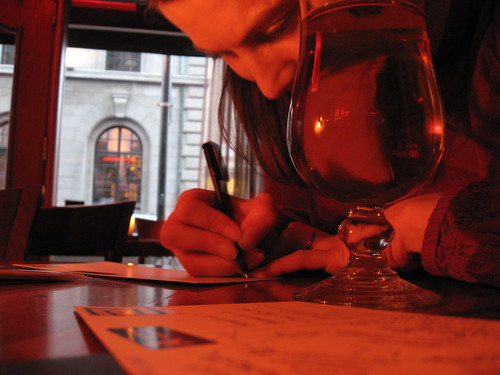
In the beginning, the Editor spoke of style and performance . But to the writer the phrase style as performance/performance as style was without form, let alone style, and utter blankness was within the mind of the writer. But the Editor had asked, "So would you be interested in doing a piece?" and the writer had thought up a piece. The Editor thought about the piece and decided the piece might work; and the Editor gave the writer a deadline.
At times to work is not to work.
At times to consider is not to consider.
A deadline is ruthless.
The more yielding it seems,
the stiffer it stands.
The ten thousand things call for attention.
The writer e-mailed the Editor: "My Lady! Most highly enlightened one, holy editorial manifestation of Krishna, thou praisest renunciation of worry, and yet thou engenderest worry. Tell me truly, in your next communication, exactly when you need me to turn in this article--in order that I may plan my seasonal activities according to our venerable traditions and yet not take a vacation during an inopportune week." The Lord Shri Editor replied: "Worry and the renunciation of worry both lead to the same consequence: the article will be turned in. Only the misguided focus on the deadline rather than on the path of action; she who knows that the two are one will stop worrying."
In the beginning were the styles, and the performance was of the styles, and the performance was the styles. And the Editor so trusted the writer that she sent only one reminder e-mail, that the writer should not feel harried but would turn in the article of her own accord. And the writer thought, "O Editor, You have agreed to this concept, and although it was my concept, so now is it Your concept, for I have given You the concept, and as I have given You the concept so have
You given it to the journal, and so now is it a concept of the journal, though it will be in the journal rather than of the journal, but it will glorify the journal, and glorify You in the journal as You have glorified me by assigning me the article which will belong to the journal and to me, and in a way to You through me, as it belongs to me through You, though I will probably end up with the reprint rights."
And so I sat me down unto the task
Of searching deep within my being
For answers to what only I could ask.
I twisted back and saw myself agreeing,
Though on a path across a different field,
A different sight ahead in full view seeing.
That sight, forsaken now, again appealed,
My joy replaced by Herculean labor,
A horror at the thought of which I reeled.
Just then a hairy being with a tabor
Came into view atop the hill ahead.
It seemed a friend, but still I clutched my sabre.
During a courtship of the Muse, it is not unusual for obstacles to arise. At such times, those suitors less capable of single-minded application may find their thoughts philandering, even keeping opprobrious company with that so dissimilar spirit Mammon. But as the writer, now residing as she did at her aunt's in H--, was in no position to affect an air of scandal when confronted with conduct of that nature, she sensibly did not judge herself with undue harshness for turning her attention to the unfashionable subject of making a living.
"I won't allow it!" she cried, slamming her glass against the table's top with such force that the others fully expected it would splinter. Her lips quivered, even trembled, and leaping to her feet, she was forced to reach for the back of a café chair to steady herself or risk toppling to the floor in her fury. I am morbidly sensitive, she thought--disgusting, diseased, a coward and a superstitious slave. Yet I am not dissatisfied with myself, merely unfit to live. "Bring me more tea," she mumbled, gesturing at the samovar with a shrug. "You've exploded again," said Ivan Petrovich. "What am I to do with you? You're ill. Even the prospect of a fine honorarium is not enough to cajole you into containing these runaway emotions."
The violet in the dewy glade--
The berry on its bush--
Stand tall--'tis true--and silent
Without the need to rush
But as the sun begins to drop
And I perforce to think--
I turn aside--'Tis time to do
Those dishes--in the sink--
She was the one writing. Being the one writing she was doing being a writer. Doing being the one writing she was writing unless she was the one not writing. There were times. Doing writing at times was doing writing and at times was doing being a writer doing writing. This was doing being a writer which is being a writer. At times she was not writing. And being not writing is being a writer who is not writing which is not being a writer.
Ah but there's only one way as my Da told us while Ma was starching the sheets you know it takes one to know one go ahead type the article right through from the start and then you'll get your supper and don't you get saucy with me Béarnaise and soon as soon was I was walking so fast in the soft warm blackness past the squash-yellow and red painted pubs with ivy dripping in the window dodging the raindrops as if you could to the chemists on her corner a Walgreens to meet there and how was I to know with myself caught up in nail laquers every colour and more next to the boxes with their perfect rows of Q-tips that she'd come after and wait not inside but out and beyond the spot that opens the automatic doors just like that Tom O'Halloran seven years back lumbering half an hour up and down in the hot sun while I sat deserted in that hotel lobby looking for all the world like being flat stood up at 9 a.m. with the thought of well if it's to be then at least it's luxury and paneling and soft deep chairs but then he thought to look into the cool and found me just like Rhonda did coming in from the rain with a cry of oh you're there after all and we made short work of prosciutto wrapped around tiny chunks of cantaloupe for her and little toasts for me with all the toppings falling off tomatoes from one and mushrooms from the other and the warm sweet oil all over my fingers and in the margins of the pages too but here I said here it is Here.
Styles performed above: The Book of Genesis, The Tao Te Ching, The Bhagavad Gita, The Gospel of John, Dante Alighieri, Jane Austen, Fyodor Dostoyevsky, Emily Dickinson, Gertrude Stein, and James Joyce, respectively.
Robbins, Maggie
Source Citation Robbins, Maggie. "To Write and Write Not." Southwest Review 95.1-2 (2010): 283+. Literature Resource Center. Web. 17 Mar. 2012.
Document URL
http://go.galegroup.com/ps/i.do?id=GALE%7CA226363810&v=2.1&u=22054_acld&it=r&p=LitRC&sw=w
..
Gale Document Number: GALE|A226363810
Subscribe to:
Posts (Atom)